Toilet-Seat Rules and Other Service Agreements
View the printable version of this newsletter.
Co-production (see Newsletter 9) requires effective partnerships. Partnerships are challenging even under the best circumstances. A partnership that works one moment might not work as well, or at all, the next. A shared vision, values, and goals aren’t enough. I got burned enough times on high school group projects that I started paying closer attention to governance and collaboration. I developed a service-agreement mentality. What’s the desired outcome? Who does what? How are decisions made? What are the boundaries of behavior?
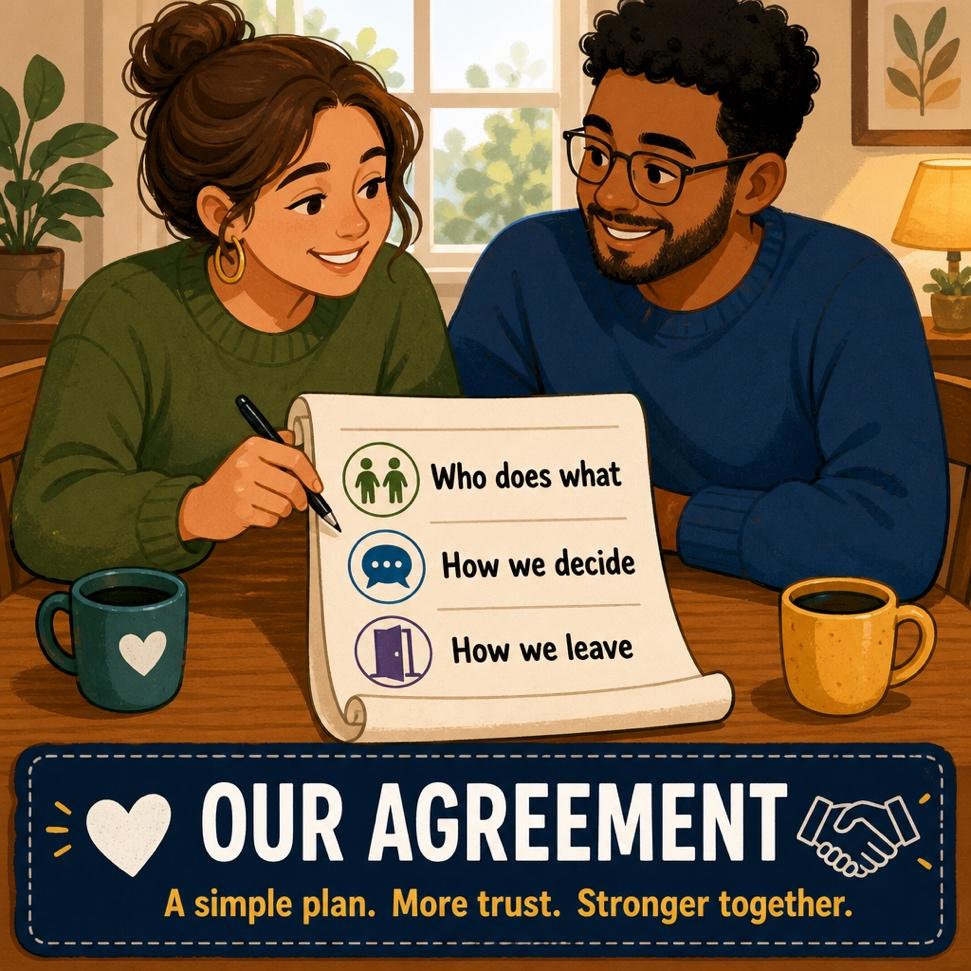
My longest-standing partnership is with my wife of fifty-one years. We raised a family, cared for others, and contributed to the community. We periodically renegotiate our unwritten service agreement. It covers cooking, cleaning, home maintenance, parenting, caregiving, bill paying, and moving. We set boundaries for acceptable behavior: toilet-seat rules and conflict resolution. Major changes to our agreement mark milestones in the partnership.
Once I became a boss, I began formalizing the process for accepting tasks for myself or my team, first verbally and then in writing. When I introduced service agreements with adjacent departments we serve or that serve us, I had mixed results, at best. Most people thought it was annoying. The relationships that most needed a service agreement resisted it the hardest, while the ones that already ran smoothly were the ones willing to put it in writing.
Since you joined our Village, you know about partnerships: the good, the bad, and the ugly. At best, they’re messy. As TMOH evolves, we want to model what we’re asking of others, starting with informal service agreements. We’re writing service agreements in plain language and keeping them brief. Service agreements often become the seeds of contracts when partnerships require formal agreements.
What does this mean for you? We hope TMOH’s Data Sovereignty Covenant reflects a middle ground between service agreements and contracts.
What are the good, the bad, or the ugly in the collaborations you’re involved in? Do you use service agreements? Where do you wish you had them?
Onward, Danny Health Hats
Defining expectations, roles, and responsibilities is always helpful. Aligned with mission, vision, and core value statements, it keeps folks on the same path. When the group wanders, these foundational elements help them return to the core path. We are in such a grey world right now. Being intentional about talking through these agreements and commitments are more important than ever.